Cocoa prices have fallen from records, so why is chocolate still expensive?
Cocoa traded above $12,000 a tonne in 2024 and around $4,700 in November 2026. Chocolate prices have not followed, because manufacturers buy cocoa months in advance and are still working through beans bought near the peak.
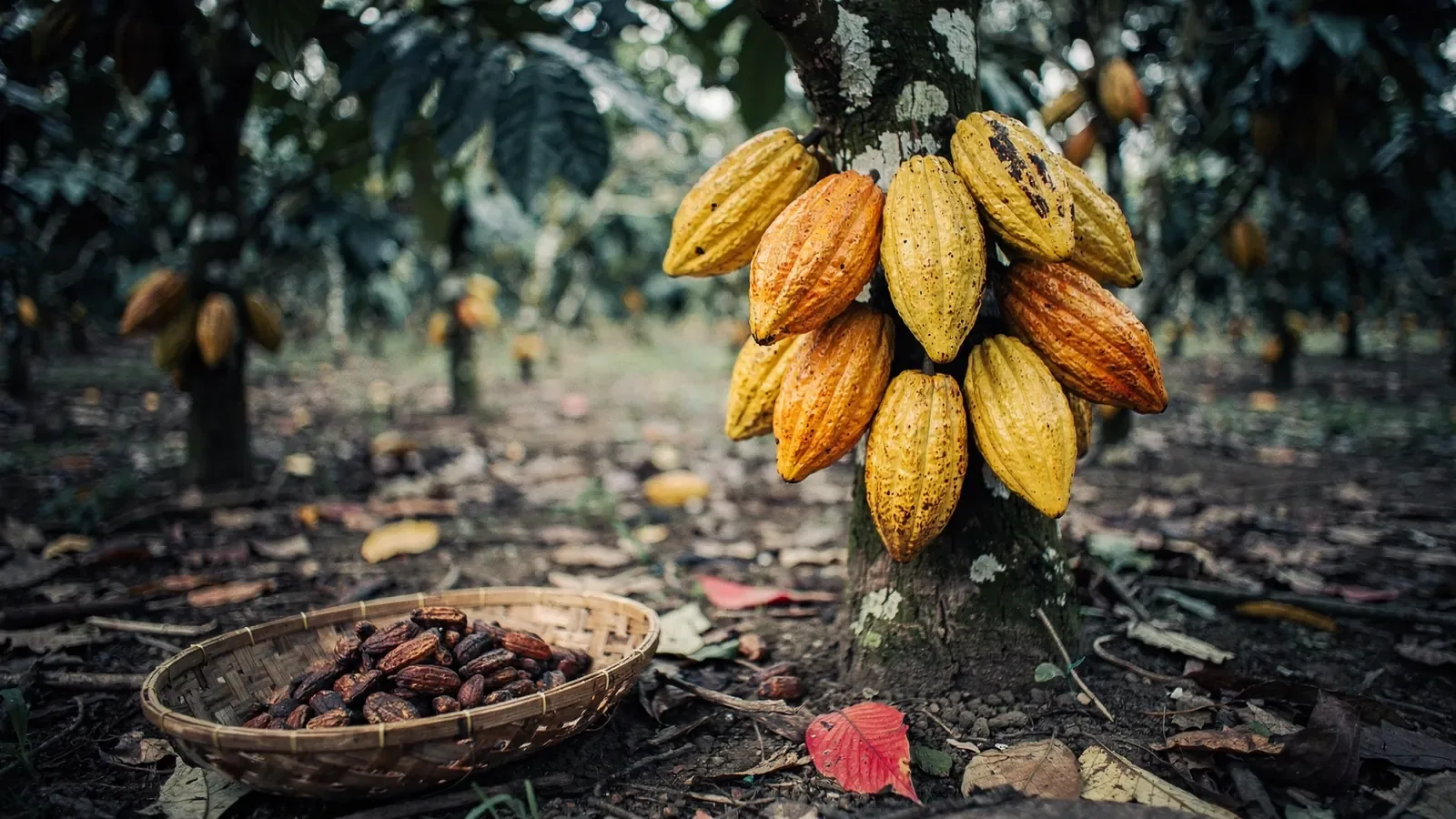
Chocolate is still expensive because the cocoa in today's bars was bought months ago, when prices were far higher. Cocoa futures in New York topped $12,000 a tonne in 2024 and traded around $4,700 in early November 2026, but manufacturers lock in supplies well ahead, and they have been raising prices to protect margins. Shoppers may only see relief slowly, if at all.
Why did cocoa prices soar?
Cocoa prices soared because of a run of poor harvests in West Africa, which produces most of the world's supply. Ghana and Ivory Coast alone grow about 60% of the world's cocoa, and 2024 was "the culmination of three successive years of unfavorable weather events in West Africa", David Branch of the Wells Fargo Agri-Food Institute told CNN. Futures in New York climbed above $12,000 a tonne in December 2024, a record at the time, as worries grew about output in Ivory Coast, Dabafinance reported.
How far have cocoa prices fallen?
Cocoa prices have fallen by more than half from their peak, though the path has been volatile. By early April 2026, beans were trading at about $3,300 a tonne, according to CNN. London cocoa then recovered from about £2,100 a tonne in early March to above £4,800 by the start of September, Reuters reported.
In early November, New York futures eased to around $4,700 a tonne, the lowest since 23 June, as ICE exchange inventories reached a 2.5-year high of 3,751,670 bags, Trading Economics reported on 6 November 2026. Weather remains a risk: Reuters, citing industry technicians and exporters, said irregular rains linked to El Niño could cut Ivory Coast's 2026/27 mid-crop by 42–50%.
| Date | Price | Source |
|---|---|---|
| December 2024 | Above $12,000 a tonne (New York) | Dabafinance; CNN |
| Early March 2026 | About £2,100 a tonne (London) | Reuters |
| Early April 2026 | About $3,300 a tonne | CNN |
| Early September 2026 | Above £4,800 a tonne (London) | Reuters |
| 6 November 2026 | About $4,700 a tonne (New York) | Trading Economics |
Why hasn't chocolate got cheaper?
Chocolate has not got cheaper mainly because of time lags. Manufacturers buy cocoa through forward contracts and hedges, often many months before it reaches a factory. The Easter chocolate on US shelves in spring 2026 "was produced using cocoa purchased at its extreme high", according to Wells Fargo's David Branch, quoted by CNN. US candy prices were up 11.6% in the year to February 2026, according to the Consumer Price Index.
Price increases are visible in specific products too. Ahead of Valentine's Day 2026, a LendingTree survey of 39 chocolate products found that 82% cost more than a year earlier, with an average increase of nearly 12%, Retail Brew reported. Cocoa is also only one cost in a bar, alongside sugar, milk, packaging, energy and transport, and energy and freight costs have been pushed up in 2026 by disruption at sea, as we explain in how shipping chokepoints affect prices. For a commodity whose price has fallen faster, see our explainer on olive oil prices.
Are shoppers buying less chocolate?
Yes, higher prices appear to be denting demand. Swiss chocolate maker Lindt & Sprüngli reported organic sales growth of 4.3% in the first half of 2026, down from 12.4% for 2025, with lower volumes reflecting consumer pushback against cocoa-driven price increases, ConfectioneryNews reported.
- Prices: Lindt raised prices by an average of 11.8% in the first half of 2026 to offset higher costs.
- Volumes: those increases contributed to a 7.5% fall in volume and mix, with weaker demand particularly in Europe.
- Response: the company said it had introduced targeted price adjustments in selected markets and would step up brand activity in the second half, Food Business MEA reported.
What does this mean for cocoa farmers?
Farmers in Ivory Coast, the largest producer, have seen their guaranteed price fall sharply. The government set the farmgate price for the 2026/27 main crop at 1,200 CFA francs a kilogram, 57.1% below the record 2,800 francs of 2025/26, Ecofin Agency reported. The price had risen from 1,000 francs in 2023/24 to 1,800 in 2024/25.
The fixed price is tied to forward sales: by June 2026, the country's Coffee-Cocoa Council had already sold nearly 1 million tonnes of the 2026/27 main crop in advance, when world prices were lower. Ecofin notes that higher fertiliser costs, combined with the lower price, could squeeze investment in plantations and weigh further on productivity.
Frequently asked questions
Will chocolate prices go down in 2027?
Possibly, but not quickly. Manufacturers buy cocoa months ahead, so lower bean prices take time to reach finished products, and companies have been focused on protecting margins. Weather is another risk: forecasts in November 2026 suggested irregular rains could sharply cut Ivory Coast's 2026/27 mid-crop, which could push cocoa prices up again.
What was the highest price for cocoa?
Cocoa futures in New York rose above $12,000 a tonne in 2024, reaching a record in December 2024 amid concerns about output in Ivory Coast, the world's largest producer. By early April 2026, prices had fallen to about $3,300 a tonne, and in early November 2026 they traded around $4,700.
Where does most cocoa come from?
Most cocoa comes from West Africa. Ivory Coast and Ghana together produce about 60% of the world's cocoa, according to figures cited by CNN. That concentration means bad weather or crop disease in a small region can move world prices sharply, as happened between 2022 and 2024.
What is a cocoa farmgate price?
A farmgate price is what farmers receive for their beans before exporters, processors and traders add their margins. In Ivory Coast and Ghana, governments set a guaranteed minimum price each season. For the 2026/27 main crop, Ivory Coast set it at 1,200 CFA francs a kilogram, down from a record 2,800 francs the season before.
Sources
- CNN — Cocoa prices are falling, but not in time for Easter (4 April 2026)
- Trading Economics — Cocoa futures at over 4-month low (6 November 2026)
- Reuters, via CNBC Africa — Ivory Coast sets cocoa farmgate price at 1,200 CFA francs per kg for 2026/27 main crop (1 September 2026)
- Ecofin Agency — Ivory Coast cuts cocoa farmgate price 57% for 2026/27 crop (2 September 2026)
- ConfectioneryNews — Lindt hits pricing power limit as growth slows (21 July 2026)
- Retail Brew — Chocolate prices continue to soar this Valentine's Day (13 February 2026)
- Food Business MEA — Lindt & Sprüngli reports 4.3% organic sales growth in H1 2026 (July 2026)
- Dabafinance — Cocoa prices hit record $12,000 on Ivory Coast output concerns (20 December 2024)
More to read

Four-day week trials: what the evidence shows so far in 2026
Trials of a four-day week on full pay have consistently found less burnout and few signs of lost output, and most participating employers keep the model. The evidence is promising but comes mostly from organisations that chose to take part.

Return to office in 2026: who is mandating it and how many actually go
More large employers now require staff in the office three to five days a week, but working from home has not disappeared. In the US, about a quarter of paid workdays are still done from home, and office attendance peaks mid-week.
First year above 1.5C: 2024 crossed the line, and 2026 is set to follow
2024 was the first calendar year more than 1.5C warmer than pre-industrial times. Copernicus says 2026 is virtually certain to be the second, but the Paris Agreement limit refers to a 20-year average, not single years.