First year above 1.5C: 2024 crossed the line, and 2026 is set to follow
2024 was the first calendar year more than 1.5C warmer than pre-industrial times. Copernicus says 2026 is virtually certain to be the second, but the Paris Agreement limit refers to a 20-year average, not single years.
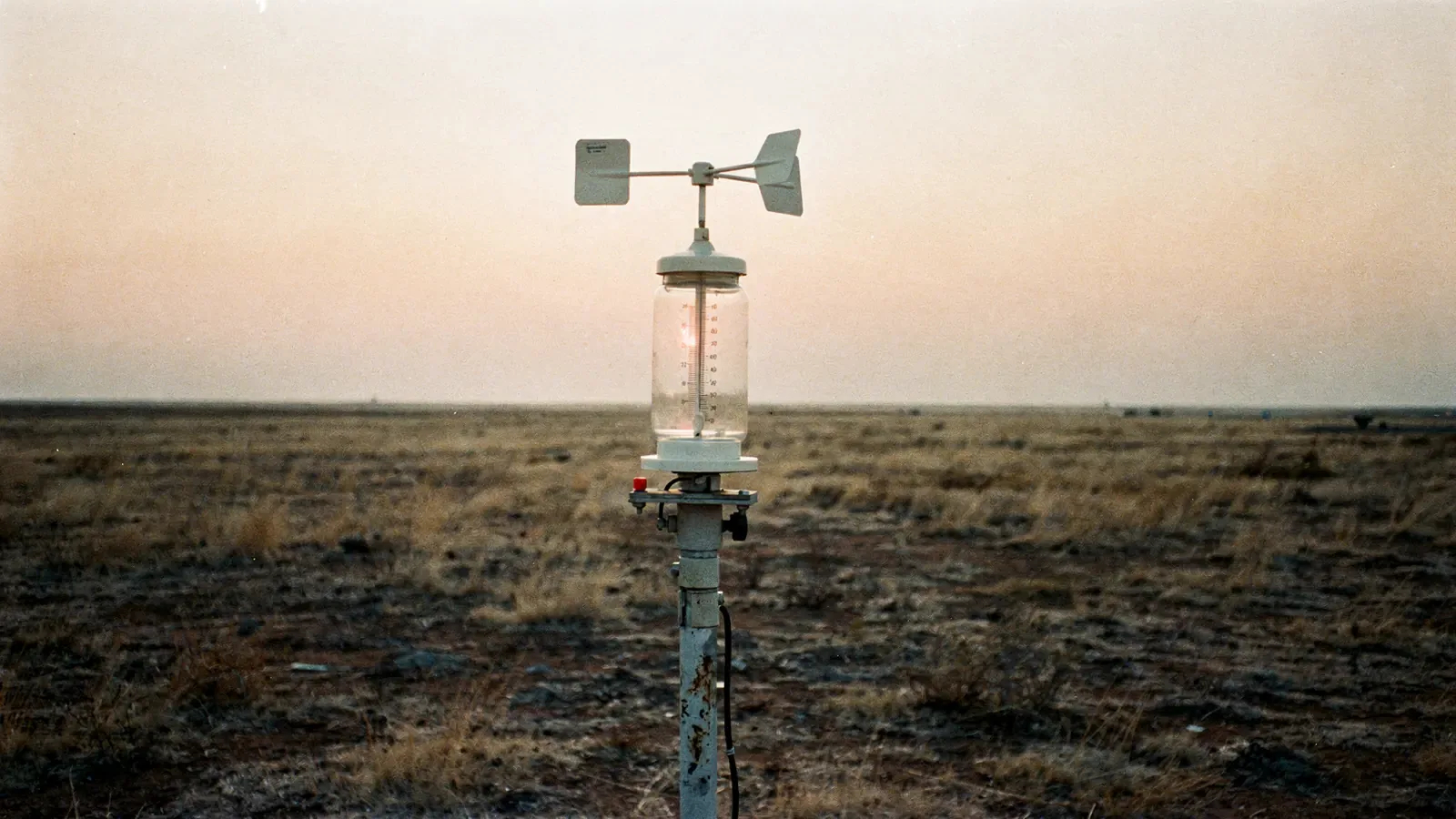
2024 was the first calendar year in which the global average temperature was more than 1.5C above the pre-industrial level. After a slightly cooler 2025, the European Copernicus service said in November 2026 that this year is virtually certain to cross 1.5C again. That does not yet mean the Paris Agreement's 1.5C limit has been breached, because it is measured over about 20 years.
Which was the first year above 1.5C?
2024 was the first. In its 2025 climate highlights, the Copernicus Climate Change Service, run by ECMWF, put 2024 at 1.60C above the 1850–1900 pre-industrial average, the warmest year on record. The WMO, which combines several datasets, estimated about 1.55C. Datasets differ by a few hundredths of a degree, but they agree that 2024 was above the line.
2024 began with a strong El Niño, a natural warming of the tropical Pacific that temporarily lifts global temperatures. That came on top of long-term warming caused by greenhouse gas emissions.
Did 2025 stay above 1.5C?
Not quite, on most datasets. Copernicus put 2025 at 1.47C, the third-warmest year on record, just 0.01C cooler than 2023. The WMO's average of datasets gave about 1.43C, plus or minus 0.13C. Even so, Copernicus reported that 2023 to 2025 was the first three-year period to average more than 1.5C, and the WMO says the eleven years from 2015 to 2025 are the eleven warmest in its 176-year record.
| Year | Copernicus (ERA5) | WMO (several datasets) |
|---|---|---|
| 2023 | About 1.48C | — |
| 2024 | 1.60C (record) | About 1.55C (record) |
| 2025 | 1.47C | About 1.43C ± 0.13C |
| 2026 | 1.56C–1.61C (forecast range) | — |
Will 2026 be above 1.5C too?
Almost certainly. On 5 November 2026, Copernicus reported that October 2026 was the warmest October on record, at 1.75C above pre-industrial levels. It said 2026 is virtually certain, meaning more than 99% likely, to finish above 1.5C, with a predicted range of 1.56C to 1.61C. It gives about an 80% chance that 2026 ends as the second-warmest year and about a 20% chance that it ties or beats 2024.
The reason is a strong El Niño. Sea surface temperatures in the central Pacific's Niño 3.4 region were 3.21C above normal in October, an all-time high for that index. Samantha Burgess, strategic lead for climate at ECMWF, said in the Copernicus release: "An exceptionally strong El Niño is adding further heat to a climate already warmed by human activities." Ocean temperatures outside the polar regions also set an October record, a trend explained in our article on why the oceans keep breaking heat records.
Does this mean the Paris 1.5C limit has been broken?
No, not yet. The Paris Agreement's 1.5C and 2C levels refer to long-term warming, typically assessed over about 20 years, and the WMO says single years above those levels do not mean the goals are out of reach. ECMWF estimates long-term warming at about 1.4C.
The margin is shrinking fast, though. ECMWF says that at the current rate, the 1.5C long-term limit could be reached by the end of this decade, more than ten years earlier than expected when the agreement was signed in 2015. Carlo Buontempo, director of the Copernicus Climate Change Service, said in January 2026: "We are bound to pass it."
What do forecasters expect for the next five years?
More record heat is likely. The WMO's annual-to-decadal update, published on 28 May 2026 and produced with the UK Met Office, gives these probabilities for 2026 to 2030:
- 91% chance that at least one year exceeds 1.5C above the 1850–1900 average.
- 75% chance that the five-year average for 2026–2030 exceeds 1.5C.
- 86% chance that at least one year beats 2024 as the warmest on record.
- Annual temperatures expected between 1.3C and 1.9C above pre-industrial levels.
Every fraction of a degree raises the risk of heatwaves, heavy rain and other extremes. Cutting emissions from buildings is one lever; our guide to how heat pumps work explains one of the main technologies involved.
Frequently asked questions
What does 1.5C above pre-industrial mean?
It means the global average surface temperature is 1.5C higher than the average for 1850 to 1900, the period scientists use as a baseline before large-scale fossil fuel burning. The Paris Agreement of 2015 aims to limit warming to well below 2C and to pursue efforts to keep it to 1.5C, measured as a long-term average.
Why was 2025 cooler than 2024?
The strong El Niño that boosted temperatures in 2023 and 2024 faded, so 2025 lacked that natural extra heat. Even without it, Copernicus put 2025 at 1.47C above pre-industrial levels, the third-warmest year on record, showing how high the underlying warming has become.
Is 2026 going to be the hottest year on record?
Probably not, but it will be close. As of November 2026, Copernicus gives about an 80% chance that 2026 ends as the second-warmest year and about a 20% chance that it ties or beats 2024. Scientists expect the developing El Niño could make 2027 a strong candidate for a new record.
How much has the world warmed in the long term?
ECMWF estimates long-term warming at about 1.4C above pre-industrial levels. It says that at the current rate, the 1.5C long-term threshold of the Paris Agreement could be reached by the end of this decade, more than a decade earlier than predicted when the agreement was signed.
Sources
- Copernicus — Warmest October on record with 2026 virtually certain to exceed 1.5C (5 November 2026)
- ECMWF — 2025 was the third-warmest year on record, Copernicus data show (14 January 2026)
- Copernicus — 2025 was the third hottest year on record (14 January 2026)
- WMO — Earth's climate swings increasingly out of balance (State of the Global Climate 2025) (23 March 2026)
- WMO — New report suggests more global temperature records ahead (28 May 2026)
More to read
Heat pumps explained: how they work, how efficient they are, who buys them
A heat pump moves heat from outside air or the ground into a home, delivering more heat than the electricity it uses. European sales rose 13% in 2025 after two years of decline, led by Germany.

Ocean heat records: why the seas keep getting warmer every year
The oceans absorb more than 91% of the extra heat trapped by greenhouse gases, and their heat content set a record for the ninth year running in 2025. In October 2026, sea surface temperatures hit another monthly record.

Measles comeback: why the US could lose its elimination status in 2026
Measles has returned to countries that once eliminated it, driven by gaps in vaccination. The US has confirmed more than 5,000 cases in 2026, and regional health experts are reviewing its elimination status this week.