Shipping chokepoints: how Hormuz, Suez and Panama affect what you pay
A handful of narrow sea lanes carry a large share of world trade. In 2026 the Strait of Hormuz has been disrupted by war, the Red Sea route is only partly back and the Panama Canal faces drought limits, keeping freight and fuel costs high.
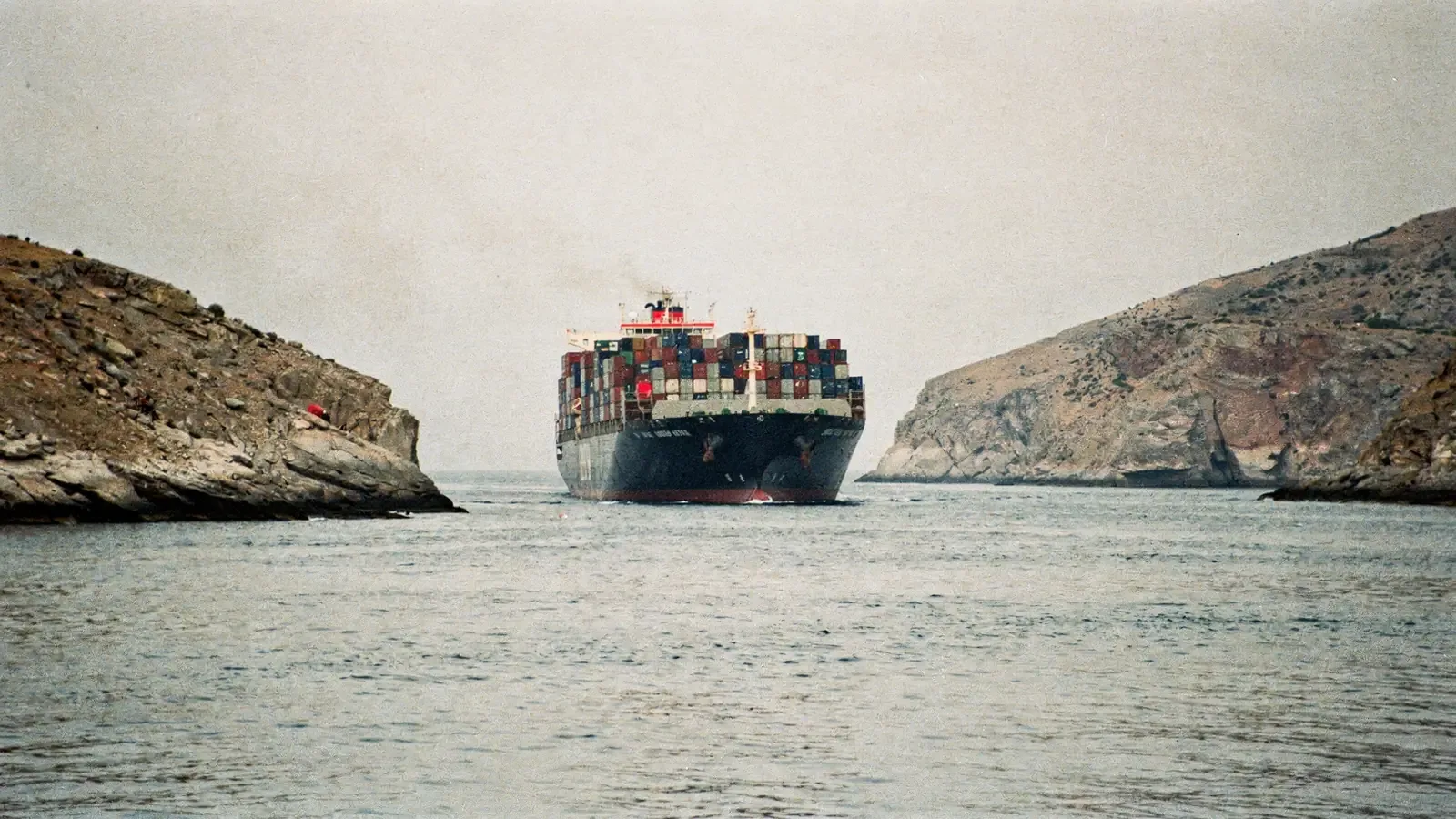
Shipping chokepoints are narrow passages that a large share of world trade must pass through, and when one is blocked, prices rise far beyond the region. Longer routes, higher insurance and dearer fuel eventually reach shop shelves and petrol pumps. As of November 2026, the Strait of Hormuz remains disrupted by the war involving Iran, container lines are only partly back in the Red Sea, and drought has forced draft limits at the Panama Canal.
What is a shipping chokepoint?
A chokepoint is a narrow strait or canal on a major trade route, with few or costly alternatives. The best known are the Strait of Hormuz at the mouth of the Gulf, the Bab el-Mandeb strait and Suez Canal linking the Red Sea to the Mediterranean, the Panama Canal between the Atlantic and the Pacific, and the Strait of Malacca in South-East Asia.
| Chokepoint | What passes through | Situation in 2026 |
|---|---|---|
| Strait of Hormuz | About 20 million barrels of oil a day and around a fifth of global LNG trade (2024) | Disrupted since the war began on 28 February; flows partly recovered under naval escort |
| Red Sea and Suez Canal | Main Asia–Europe container route | Carriers left again in March; 63% of Asia–Europe capacity back by mid-October |
| Panama Canal | Trade between the Atlantic and the Pacific | Draft limits for the largest ships since summer 2026 because of El Niño |
What has happened to the Strait of Hormuz in 2026?
Hormuz has been the most serious disruption of 2026. In 2024, oil flows through the strait averaged 20 million barrels a day, equal to about 20% of global petroleum liquids consumption, and around one-fifth of global liquefied natural gas trade also passed through it, mostly from Qatar, according to the US Energy Information Administration. After US and Israeli strikes on Iran on 28 February 2026, ships in the area received radio messages from Iran's Revolutionary Guards saying no ship was allowed to pass, and major container lines suspended transits, WorldCargo News reported.
Oil flows have since partly recovered. The International Energy Agency put total oil flows through the strait at 10.9 million barrels a day in September, and observed oil stocks at the end of September were 509 million barrels below pre-war levels, gCaptain reported in October. Shipping remains dangerous and expensive. The International Maritime Organization tracked 131 confirmed incidents near the strait from 28 February to 9 November, including 35 in October alone, and freight and insurance costs for Gulf tankers remain about ten times pre-war levels, according to a Reuters analysis published on 11 November. Brent crude settled at $92.57 a barrel on 9 November, Xinhua reported.
Are container ships back in the Red Sea?
Partly. Container lines had largely avoided the Red Sea since Houthi attacks began in late 2023, and a hoped-for return in early 2026 was shelved when the Iran war started.
By autumn the trend had reversed. Between 15 September and 15 October 2026, 5.50 million of the 8.70 million TEU deployed on the Far East–Europe trade used the Red Sea, or 63%, analysts at Alphaliner said, Ship & Bunker reported on 21 October. Evergreen and ZIM were the only two of the ten largest carriers not to have returned. The Suez route saves around two weeks of sailing compared with the Cape, but security risks remain.
Why is the Panama Canal restricted again?
The Panama Canal depends on rainwater stored in Gatun Lake to operate its locks, so drought limits how many ships pass and how deep they can sit in the water. In 2023 and 2024, an El Niño-driven drought cut daily transits to as few as 24 vessels, before rains restored normal operations of about 36 transits a day in 2025, gCaptain reported.
With El Niño returning in 2026, the Panama Canal Authority lowered the maximum draft for the largest Neopanamax ships to 48 feet from 26 August and to 47.5 feet from 3 September, The Maritime Executive reported. Water shortages are not only a shipping problem: we look at the wider picture in cities running out of water.
How do shipping disruptions reach consumer prices?
Shipping disruptions raise prices through several channels, and the effect builds over months rather than days. The main ones are:
- Longer routes. Diverting around Africa adds sailing time and fuel, and ties up more ships to carry the same cargo.
- Surcharges and insurance. After the strikes on Iran, CMA CGM introduced an emergency conflict surcharge of $2,000 per 20-foot container and $3,000 per 40-foot container on affected cargo.
- Energy prices. Disruption at Hormuz feeds directly into crude oil, diesel and gas prices, which feed into transport and production costs for most goods, from fuel to food; see how input costs shape chocolate prices.
- Inflation. IMF economists found that "when freight rates double, inflation picks up by about 0.7 percentage point", with the effect taking about a year to peak, according to the IMF blog.
Frequently asked questions
Is the Strait of Hormuz open in November 2026?
Only partially. Since the war began on 28 February 2026, traffic has been heavily restricted. Tankers now pass in convoys under US naval protection, and oil flows have partly recovered, but attacks continue. The IMO counted 131 confirmed incidents near the strait between 28 February and 9 November 2026, and freight and insurance costs remain about ten times pre-war levels.
How much of the world's oil goes through the Strait of Hormuz?
In 2024, about 20 million barrels of oil a day passed through the Strait of Hormuz, equal to roughly 20% of global petroleum liquids consumption and more than a quarter of seaborne oil trade, according to the US Energy Information Administration. Around one-fifth of global liquefied natural gas trade, mostly from Qatar, also passed through the strait.
Why do ships avoid the Red Sea?
Since late 2023, Yemen's Houthi movement has attacked or threatened commercial ships in the Red Sea and the Bab el-Mandeb strait. Many shipping lines diverted around the Cape of Good Hope, which adds roughly two weeks to an Asia–Europe voyage. By October 2026, most large carriers had returned to the Suez route, but Evergreen and ZIM had not.
Do higher shipping costs cause inflation?
They contribute to it. Research by IMF economists found that when freight rates double, inflation rises by about 0.7 percentage point, with the effect peaking after about a year. The impact is larger in countries that import more of what they consume. Energy prices, which chokepoint disruptions also push up, add a further effect.
Sources
- US Energy Information Administration — Amid regional conflict, the Strait of Hormuz remains critical oil chokepoint (June 2025)
- WorldCargo News — Carriers divert ships after US and Israeli strikes on Iran (1 March 2026)
- gCaptain — IEA moves to accelerate oil reserve releases as Hormuz crisis drags on (16 October 2026)
- Reuters, via Cyprus Mail — Gulf oil faces costly new reality as Iran war drags on (11 November 2026)
- Ship & Bunker — Container lines shift 63% of Far East–Europe capacity back to Suez Canal: Alphaliner (21 October 2026)
- The Maritime Executive — Panama Canal cuts draft for largest ships as El Niño intensifies (6 August 2026)
- gCaptain — El Niño watch puts Panama Canal back in focus after dramatic drought recovery (9 April 2026)
- IMF Blog — How soaring shipping costs raise prices around the world (28 March 2022)
More to read

World population ageing: why over-65s will soon outnumber children
The world is getting older because people are having fewer children and living longer. The UN projects that people aged 65 and over will outnumber children under 18 by the late 2070s, with Japan, Europe and China already feeling the effects.
Cities running out of water: what Tehran, Mexico City and Cape Town show
No major city has completely run dry, but Tehran, Mexico City and Cape Town have come close. Drought is the trigger; the deeper cause is decades of over-pumping, which a UN report now calls "water bankruptcy".
First year above 1.5C: 2024 crossed the line, and 2026 is set to follow
2024 was the first calendar year more than 1.5C warmer than pre-industrial times. Copernicus says 2026 is virtually certain to be the second, but the Paris Agreement limit refers to a 20-year average, not single years.