EU Entry/Exit System and ETIAS: what changes for travellers in late 2026
Europe's biometric Entry/Exit System has replaced passport stamps since April 2026. ETIAS, the €20 travel authorisation for visa-free visitors, is still not running, and as of November 2026 the EU has given no new start date.
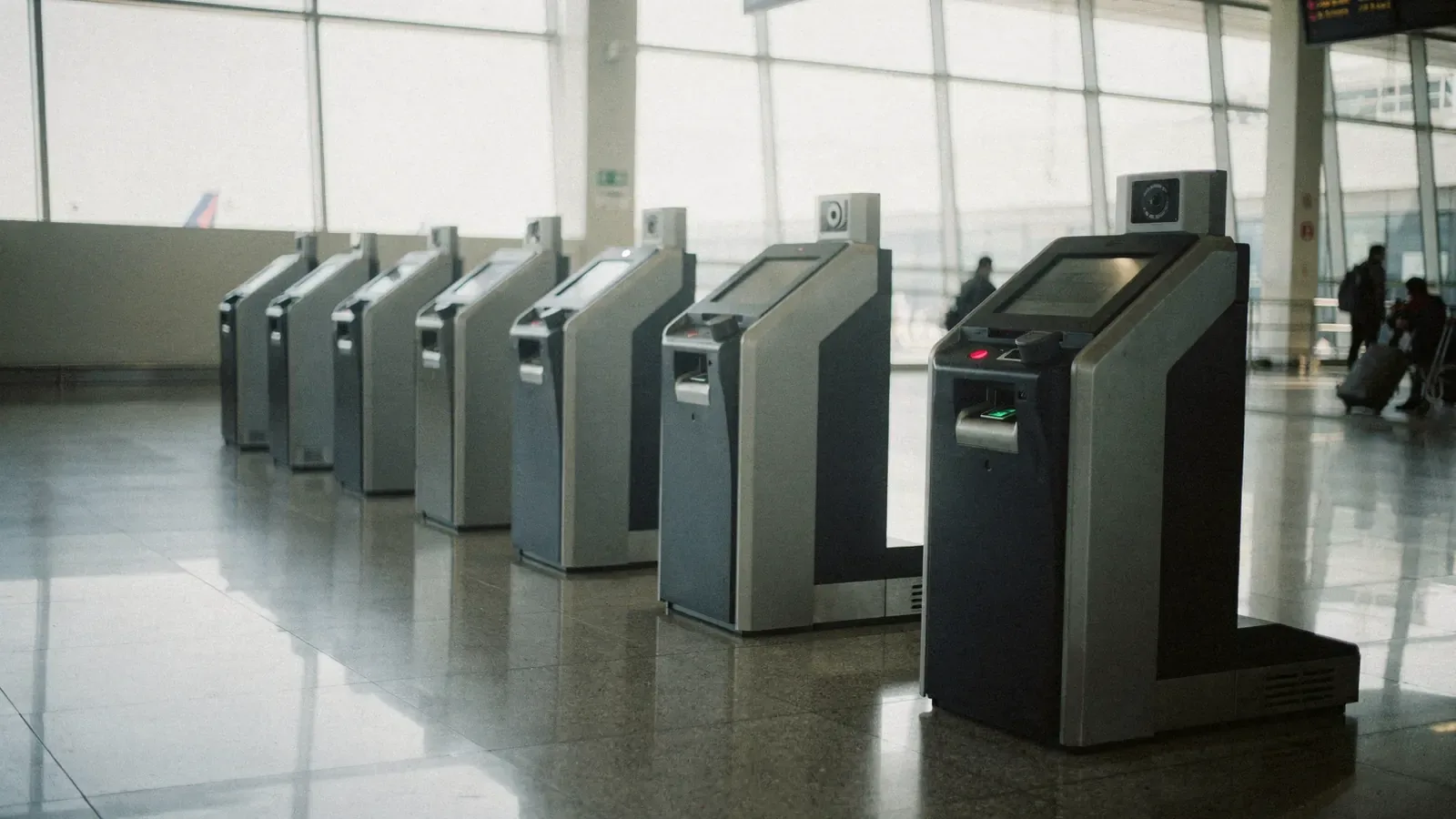
Non-EU visitors to most of Europe now have their fingerprints and face scanned at the border instead of getting a passport stamp. The Entry/Exit System (EES) has been fully operational since 10 April 2026. Its companion, the ETIAS travel authorisation, is a different matter: as of November 2026 it is not in operation, no applications are being collected, and the EU has not announced when it will start.
What is the Entry/Exit System and who does it apply to?
The EES is a digital register of border crossings by non-EU nationals on short stays, and it replaces passport stamping. According to the European Commission, it stores the traveller's name, travel document details, fingerprints, facial image and the date and place of every entry and exit. Refusals of entry are logged too.
It covers visa-exempt visitors such as British and American tourists as well as visa holders. It does not apply to EU citizens. The system runs in 29 European countries; Ireland and Cyprus do not use it and keep manual passport checks, Euronews reported. Data is kept for three years, and children under 12 are photographed but not fingerprinted.
What happens at the border now?
On a first trip after April 2026, a non-EU traveller registers once, at a kiosk or a staffed desk, and later crossings are checked against that record. The steps are usually these:
- Scan the passport at a self-service kiosk or at a border officer's desk.
- Give fingerprints (children under 12 are exempt) and have a facial photo taken.
- Answer the officer's usual questions about the purpose and length of the stay.
- On later trips within three years, a face or fingerprint check confirms the existing record.
Some countries let travellers start earlier. The official Travel to Europe app lets visitors pre-register passport data and a photo up to 72 hours before arrival, but only in some countries such as Portugal and Sweden, and it does not replace the border interview.
Has the EES caused longer queues?
Yes, at busy times. In April 2026 Euronews reported that waits were regularly reaching up to two hours at peak periods at some airports. Temporary rules allowed member states to scale back biometric registration during severe congestion over the summer, but those rules expired on 6 September 2026, according to the immigration consultancy Newland Chase. Industry bodies including IATA and ABTA have asked the Commission to restore them.
The system is also doing what it was built for. In its State of Schengen report of 18 May 2026, the Commission said member states registered over 66 million entries and exits in the first six months and refused entry to 32,000 people. By early July, the Commission told Politico that 43,728 people had been refused entry since October 2025, Connexion reported, including 8,739 who would have overstayed.
What is ETIAS and when will it start?
ETIAS is an online travel authorisation that visa-exempt visitors will need before trips to 30 European countries, and it has no start date as of November 2026. The Commission says the fee has been set at €20 instead of the earlier €7, and that it will announce the start date "several months prior to its launch". An approved authorisation is expected to last three years or until the passport expires, Afar reported.
The launch has slipped many times. The regulation was adopted in 2018; by March 2025 the target was the last quarter of 2026. In July 2026 the Financial Times reported that eu-LISA, the EU agency building the system, no longer considered a 2026 launch feasible, and the Q4 2026 target was removed from the official website, according to SchengenVisaInfo. Most reporting now points to 2027, but no official date exists. The next eu-LISA management board meeting with a public date is set for 17 to 19 November 2026 in Dublin.
| Entry/Exit System (EES) | ETIAS | |
|---|---|---|
| What it is | Biometric record of each border crossing | Online pre-travel authorisation |
| Who it concerns | Non-EU short-stay travellers, with or without a visa | Visa-exempt visitors only |
| Countries | 29 (not Ireland or Cyprus) | 30 |
| Cost | Free | €20 (planned) |
| Status | Fully operational since 10 April 2026 | Not in operation; no launch date |
What should travellers do now?
For now, plan for the EES and ignore anyone selling ETIAS. Allow extra time at the first Schengen border on a trip, especially at airports and ferry ports in peak season, and check whether your arrival country supports pre-registration in the Travel to Europe app. Because no ETIAS applications are being accepted, any website asking for an ETIAS payment today is not official. Heavier border checks also matter for cities already struggling with visitor numbers, and for travellers weighing overnight rail routes across Europe, where checks can happen at stations rather than airports.
Frequently asked questions
Do UK and US citizens need ETIAS in 2026?
No. As of November 2026 ETIAS is not in operation and no applications are being collected. British, American and other visa-exempt travellers still enter with a valid passport, but they are registered in the Entry/Exit System, which means fingerprints and a facial photo on their first crossing. The EU says it will announce the ETIAS start date several months before launch.
How much will ETIAS cost?
The European Commission says the ETIAS fee has been set at €20, up from the €7 originally planned, and that the new amount will apply once the system is operational. Reporting on the planned rules says an approved authorisation should be valid for three years or until the passport expires, whichever comes first. No payment is possible yet.
Which countries do not use the Entry/Exit System?
Ireland and Cyprus do not use the EES, so they keep manual passport checks for non-EU visitors. The system runs at the external borders of 29 European countries, including the Schengen members. EU citizens are not registered in it, and it only concerns non-EU nationals coming for short stays of up to 90 days in any 180-day period.
How long does the EES keep my fingerprints?
Biometric data is stored for three years, according to Euronews' guide to the system, which is why returning travellers should face quicker checks after their first registration. Children under 12 do not give fingerprints but still have their photo taken. The record also logs the date and place of each entry and exit, which allows overstays to be detected automatically.
Can border guards still suspend EES checks when queues are long?
Not under the temporary rules that applied this summer. Member states could scale back biometric registration during severe congestion, but that flexibility expired on 6 September 2026. Airlines and travel associations have asked the European Commission to restore it, possibly until April 2027. As of November 2026 no decision to extend it has been published.
Sources
- European Commission — Entry/Exit System (accessed November 2026)
- European Commission — European Travel Information and Authorisation System (accessed November 2026)
- eu-LISA — Entry/Exit System fully deployed across EU (10 April 2026)
- European Commission — Commission report shows Schengen area continues to be resilient (18 May 2026)
- Euronews — Europe's Entry/Exit System: what travellers need to know (6 April 2026)
- Connexion — EES: 44,000 individuals refused entry to EU since launch (6 July 2026)
- Newland Chase — EES flexibility lapses as ETIAS launch appears likely to move to 2027 (9 September 2026)
- SchengenVisaInfo — ETIAS has no launch date after years of delays (19 October 2026)
More to read
Night trains in Europe in 2026: new routes, lost routes and why they struggle
Europe's sleeper network changed sharply in 2026. A cooperative operator revived Paris–Berlin and launched Brussels–Milan, while state-backed routes such as Paris–Vienna disappeared. Demand is strong; the cost of running night trains is the problem.

Overtourism in Europe: how Venice, Barcelona and Amsterdam are pushing back
Europe received a record 793 million international tourists in 2025. Venice, Barcelona and Amsterdam now use entry fees, higher taxes and limits on holiday lets, and in November 2026 the EU adopted its first tourism strategy.
First year above 1.5C: 2024 crossed the line, and 2026 is set to follow
2024 was the first calendar year more than 1.5C warmer than pre-industrial times. Copernicus says 2026 is virtually certain to be the second, but the Paris Agreement limit refers to a 20-year average, not single years.