Fermentation at home: how to make sauerkraut and kombucha safely
Home fermentation is safe when you follow tested methods: the right amount of salt, vegetables kept under brine, steady temperatures and clean equipment. Official US guidance also says to discard anything mouldy, foul-smelling or in a bulging container.
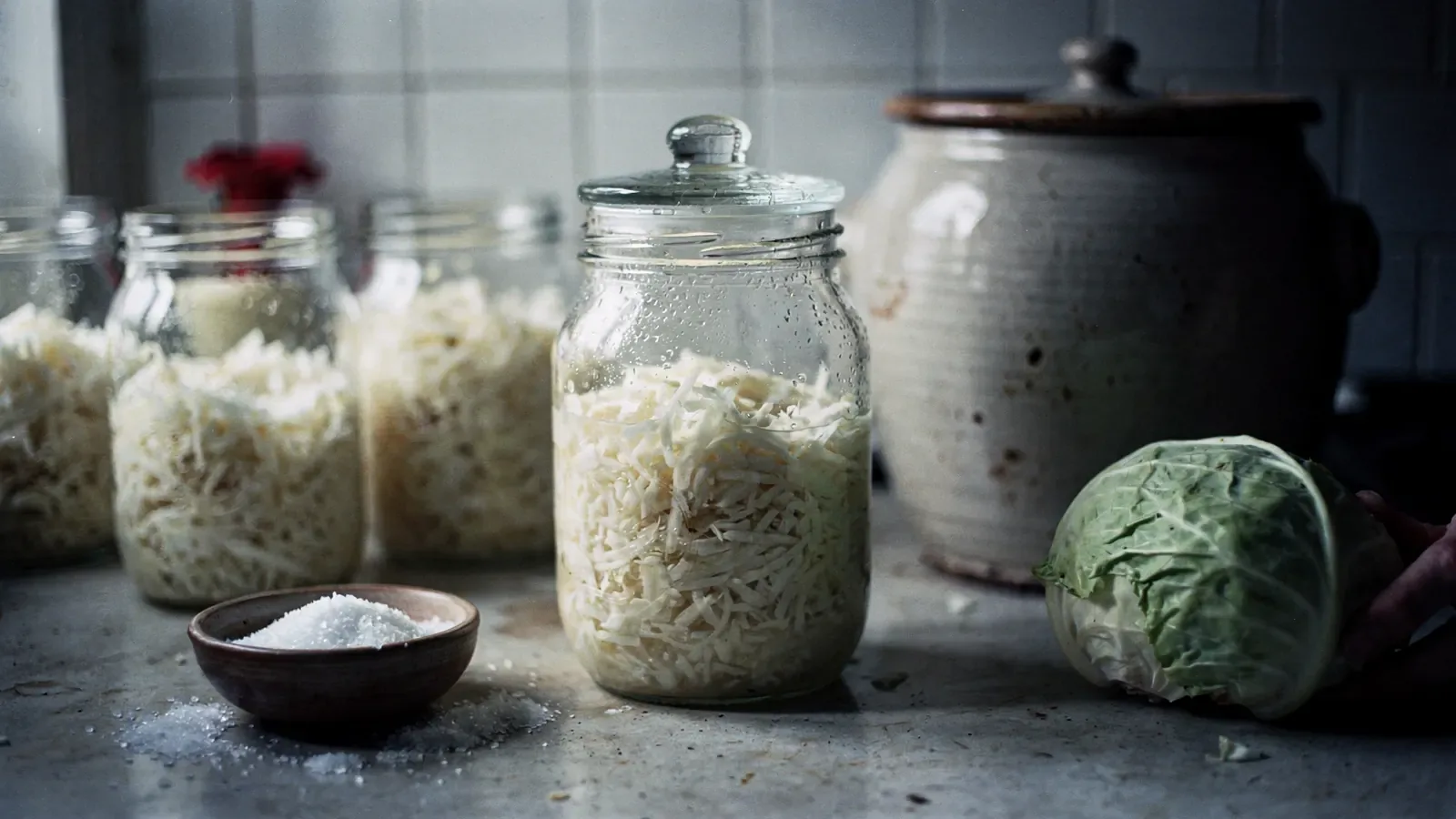
Fermenting food at home is safe if you follow tested methods. For vegetables such as sauerkraut, that means weighing the salt, keeping everything below the brine, fermenting at a steady room temperature and using clean, food-grade containers. The US Centers for Disease Control and Prevention (CDC) warns that improperly fermented foods can cause botulism, so anything mouldy, discoloured or bad-smelling should be thrown away.
What counts as a fermented food?
A fermented food is made by deliberately letting microbes grow and transform it. An expert panel of the International Scientific Association for Probiotics and Prebiotics (ISAPP) defined fermented foods in 2021 as foods made through "desired microbial growth and enzymatic conversions of food components", News-Medical reported. Sauerkraut, kimchi, yogurt, kefir and kombucha qualify.
Fermented and probiotic are not the same thing. Under the ISAPP consensus, a fermented food should only be called probiotic when it still contains live microbes at the time it is eaten, and those microbes are defined and have been shown in a study to provide a health benefit.
Are fermented foods good for you?
There is some encouraging evidence, but it is limited. In a Stanford Medicine trial published in Cell in July 2021, 36 healthy adults were randomly assigned to a 10-week diet high in either fermented foods or fibre. In the fermented-food group, gut microbial diversity rose and levels of 19 inflammatory proteins in the blood fell, including interleukin 6. None of these 19 proteins fell in the high-fibre group.
The researchers called it a proof-of-concept study. The ISAPP panel noted that evidence on fermented foods relies more on observational studies than on randomised trials. Fermented dairy such as yogurt is part of the eating pattern discussed in our article on the science of the Mediterranean diet.
How do you make sauerkraut safely?
Follow a tested recipe and measure the salt. The University of Georgia's National Center for Home Food Preservation (NCHFP), which provides research-based home preservation advice, publishes a tested sauerkraut method. Its key steps are:
- Use firm, fresh cabbage.
- Mix 3 tablespoons of canning or pickling salt into each 5 lb (about 2.3 kg) of shredded cabbage.
- Pack it firmly until the salt draws out enough juice to cover the cabbage. If it does not, add brine made with 1½ tablespoons of salt per quart (about 0.95 litres) of boiled, cooled water.
- Weigh the cabbage down so it stays 1 to 2 inches (2.5 to 5 cm) below the brine, and cover the container with a clean towel.
- Check two or three times a week and remove any scum.
- When fermentation is complete, keep the sauerkraut tightly covered in the refrigerator, where it keeps for several months, or can it using tested processing times.
| Temperature | What to expect |
|---|---|
| 70–75°F (21–24°C) | Recommended; fully fermented in about 3–4 weeks |
| 60–65°F (16–18°C) | Slower; may take 5–6 weeks |
| Below 60°F (16°C) | May not ferment |
| Above 75°F (24°C) | Kraut may become soft |
What containers and equipment should you use?
Use glass, food-grade plastic or a stone crock. The NCHFP's guidance on containers allows about 1 gallon (3.8 litres) per 5 lb of vegetables and says food should touch only food-grade plastics, never bin liners.
Wash all equipment in hot soapy water and rinse it in very hot water. Avoid brass, copper and zinc utensils, which can discolour pickles.
When should you throw a batch away?
Whenever you are unsure. The CDC's botulism prevention page names improperly canned, preserved or fermented homemade foods as common sources of botulism and says not to eat food if you do not know whether it was safely prepared. Its home-canning guidance adds clear warning signs.
- Discard food that is discoloured, mouldy or smells bad.
- Discard containers that leak, bulge or swell, or that spray liquid or foam when opened.
- Never taste food to find out whether it is safe: "When in doubt, throw it out."
- Refrigerate canned or pickled foods after opening the jar.
- Soft or slippery fermented pickles are often caused by weak brine, high temperatures or vegetables not fully submerged; the NCHFP says not to eat them if spoilage is evident.
Low-acid foods are a separate risk. The CDC says foods with a pH above 4.6, such as plain vegetables, must be pressure-canned, because a boiling-water canner does not protect against botulism. It also advises refrigerating homemade oils infused with garlic or herbs and throwing them away after four days, a useful rule for anyone making flavoured oils now that olive oil prices have fallen.
Is homemade kombucha safe?
It can be, if you control acidity and hygiene. The NCHFP's kombucha method says to test the starter liquid and use it only if its pH is 4.0 or less, to sanitise equipment in water of at least 171°F (77°C) for 30 seconds, and to add the culture only once the tea has cooled below 95°F (35°C). Ferment at 68–77°F (20–25°C) for 7 to 10 days, bottle in sanitised containers, refrigerate and use within 30 days. Check sealed bottles regularly, because carbonation can build enough pressure to make them burst.
Frequently asked questions
How much salt do you need to ferment vegetables?
For sauerkraut, the National Center for Home Food Preservation recommends 3 tablespoons of canning or pickling salt per 5 lb (about 2.3 kg) of cabbage. If the cabbage does not release enough juice to stay covered, top it up with brine made from 1½ tablespoons of salt per quart of boiled, cooled water. Too little salt can lead to soft, spoiled ferments.
Can you get botulism from fermented food?
Yes, it is possible. The CDC lists improperly canned, preserved or fermented homemade foods among the common sources of botulism. Following tested recipes, keeping vegetables under brine and discarding anything that is discoloured, mouldy or bad-smelling, or in a bulging or leaking container, reduces the risk. The CDC advises never tasting food to check whether it is safe.
What temperature is best for fermenting sauerkraut?
The NCHFP recommends 70–75°F (21–24°C), at which sauerkraut is fully fermented in about three to four weeks. At 60–65°F (16–18°C) it may take five to six weeks, below 60°F it may not ferment, and above 75°F it may become soft.
Do fermented foods improve gut health?
Early evidence is encouraging. A 2021 Stanford trial of 36 adults found that eating more fermented foods for 10 weeks increased gut microbial diversity and lowered 19 inflammatory proteins in the blood. The researchers described it as a proof-of-concept study, and most other evidence on fermented foods comes from observational rather than randomised studies.
Sources
- National Center for Home Food Preservation — Sauerkraut (accessed November 2026)
- National Center for Home Food Preservation — Suitable containers, covers and weights for fermenting food (accessed November 2026)
- National Center for Home Food Preservation — Causes and possible solutions for problems with fermented pickles (accessed November 2026)
- National Center for Home Food Preservation — Kombucha tea (accessed November 2026)
- CDC — Botulism prevention (accessed November 2026)
- CDC — Home-canned foods and botulism (accessed November 2026)
- ScienceDaily / Stanford Medicine — Fermented-food diet increases microbiome diversity, decreases inflammatory proteins (12 July 2021)
- News-Medical — Scientists create first international consensus definition of fermented foods (6 January 2021)
More to read

Olive oil prices fall to their lowest since 2021 as Spain's harvest recovers
Spanish extra virgin olive oil now sells at origin for about €3.17 a kilo, around 65% below its January 2024 peak, according to European Commission data. A large 2026/27 harvest pushed prices down, and Spain has ordered mills to hold back 12% of output.
Mediterranean diet science: what the big trials show and where proof is thin
Randomised trials link the Mediterranean diet to roughly 30% fewer heart attacks, strokes and cardiovascular deaths in high-risk people. Evidence on longevity and dementia is promising but mostly observational, and some headline effects shrink once lifestyle is accounted for.

First year above 1.5C: 2024 crossed the line, and 2026 is set to follow
2024 was the first calendar year more than 1.5C warmer than pre-industrial times. Copernicus says 2026 is virtually certain to be the second, but the Paris Agreement limit refers to a 20-year average, not single years.