Heat pumps explained: how they work, how efficient they are, who buys them
A heat pump moves heat from outside air or the ground into a home, delivering more heat than the electricity it uses. European sales rose 13% in 2025 after two years of decline, led by Germany.
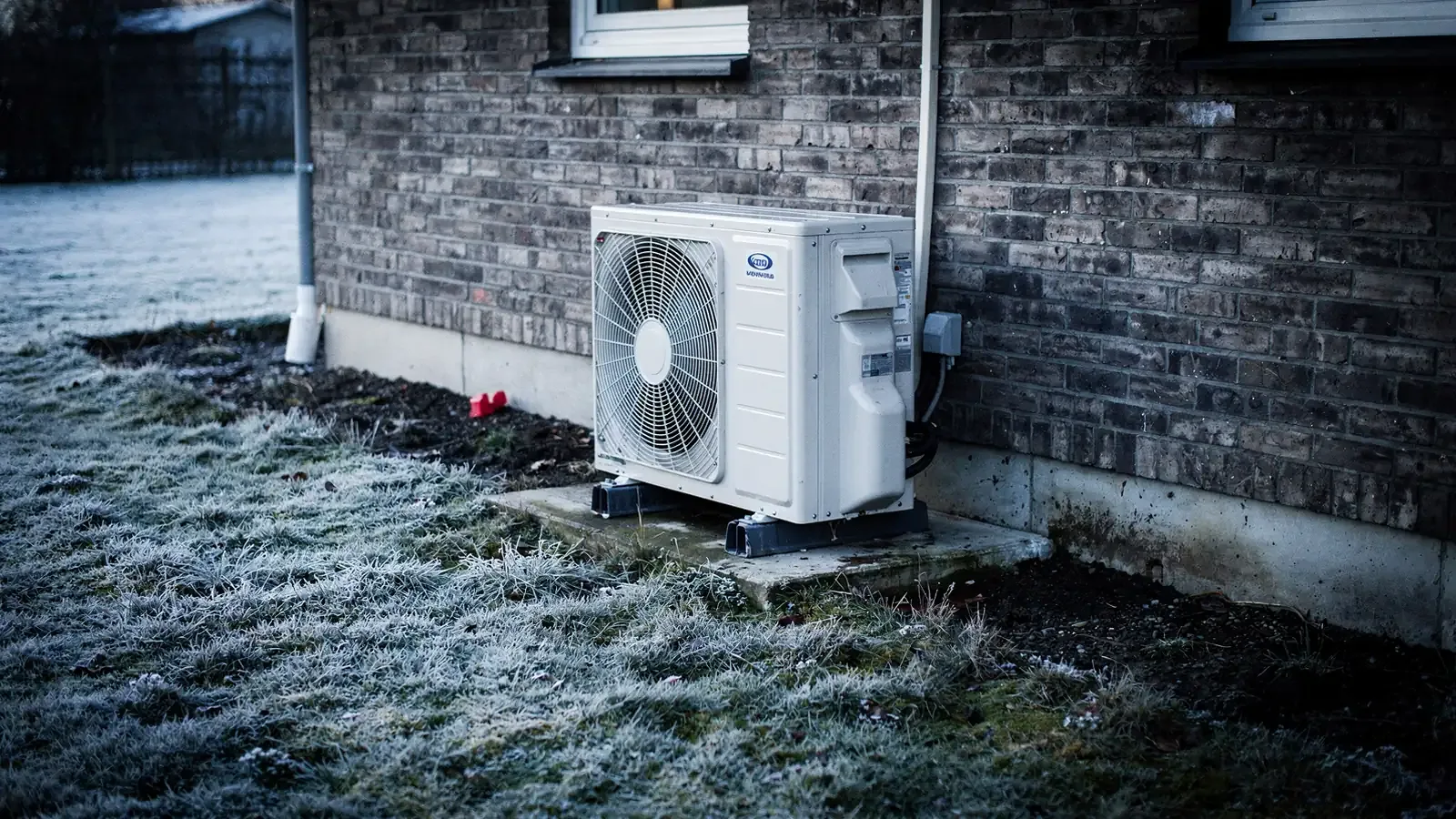
A heat pump heats a home by moving existing heat from the outside air, the ground or water indoors, rather than by burning fuel. Because it moves heat instead of making it, a well-installed heat pump delivers several units of heat for each unit of electricity it uses. In a UK field trial, air source heat pumps delivered a median 2.8 units of heat per unit of electricity over a year, and kept working on days as cold as -6C.
How does a heat pump work?
A heat pump works like a refrigerator running in reverse. A fridge pulls heat out of its interior and releases it at the back; a heat pump pulls heat out of the air or ground outside and releases it inside the house. Even cold air contains heat energy that can be captured. The process runs in a continuous loop:
- A refrigerant, a fluid that boils at a very low temperature, absorbs heat from outside air, the ground or water and turns into a gas.
- An electric compressor squeezes the gas, which raises its temperature sharply.
- The hot gas passes through a heat exchanger and gives up its heat to the home's radiators, underfloor heating, hot water tank or indoor air.
- The refrigerant cools, passes through an expansion valve that lowers its pressure, and the cycle starts again.
Most systems can also run in reverse in summer to provide cooling. The main types are air source heat pumps, which take heat from outdoor air; ground source heat pumps, which use pipes buried in the garden or boreholes; and water source pumps, which draw on rivers, lakes or other water. Air-to-water units feed radiators and hot water, while air-to-air units blow warm air into rooms.
How efficient are heat pumps?
In real homes, around three times more efficient than a gas boiler, according to UK field data. Efficiency is expressed as a coefficient of performance, or over a full year as a seasonal performance factor (SPF): the heat delivered divided by the electricity used. A gas boiler cannot exceed 100% efficiency because it can only convert the fuel it burns.
The best real-world evidence comes from the UK government-funded Electrification of Heat Demonstration Project, which monitored 742 heat pumps between November 2020 and August 2022. Energy Systems Catapult reported a median SPF of 2.80 for air source heat pumps, or 280%, across a broad range of housing types and ages. Performance varied widely between homes, which shows that installation quality and system design matter.
| System or condition | Median efficiency |
|---|---|
| Air source heat pumps, full year | 2.80 (280%) |
| Air source heat pumps, coldest days (mean daily temperature as low as -6C) | 2.44 (244%) |
| Heat pump within a hybrid system | 2.37 (237%) |
Do heat pumps work in cold weather?
Yes, though efficiency drops somewhat as temperatures fall. In the UK project, the median air source heat pump still delivered 2.44 units of heat per unit of electricity on days with mean temperatures as low as -6C, only a marginal decline. Marc Brown of Energy Systems Catapult said the data meant "we can finally put to bed the notion that heat pumps do not work in cold weather conditions".
Are heat pump sales growing in Europe?
They grew again in 2025 after two years of decline. According to European Heat Pump Association data reported by pv magazine, 2.88 million heat pumps were sold across 21 European countries in 2025, up 13% from 2.56 million in 2024. Sales remain below the record 3.31 million of 2022 and the 3.19 million of 2023. The total stock in those countries reached 29.3 million.
Germany drove much of the recovery, with market growth of 50% and heat pumps taking half of national space heating sales for the first time. The association linked the rebound to stable public incentives and lower running costs, and blamed falls in some markets, including Poland and France, on disinformation and uncertainty over support schemes.
How much does it cost to switch?
Upfront costs are higher than for a boiler, so many governments offer grants. In England and Wales, the Boiler Upgrade Scheme pays £7,500 towards an air source or ground source heat pump and £2,500 towards an air-to-air heat pump. Until March 2027, an extra £1,500 is available for air or ground source heat pumps in homes heated by oil or LPG without a mains gas connection. Running costs depend on how efficient the system is and on the local price of electricity compared with gas or oil.
Heating is a large source of emissions in cold-climate countries, so the switch matters for climate targets. For the bigger picture, see our explainers on the first years above 1.5C of warming and record ocean heat.
Frequently asked questions
Is a heat pump cheaper to run than a gas boiler?
It depends on the system's efficiency and on local energy prices. A heat pump with a seasonal efficiency of 280% uses far less energy than a boiler to deliver the same heat, but what you pay also depends on the price of each unit of electricity compared with gas. The cheaper electricity is relative to gas, the more likely a heat pump is to save money.
Do I need underfloor heating for a heat pump?
No. Heat pumps can run existing radiators, though some radiators may need replacing with larger ones because heat pumps work most efficiently at lower water temperatures. The UK Electrification of Heat project installed heat pumps across a broad range of housing types and ages, and found high-temperature models performed comparably to standard ones.
What is the difference between air source and ground source heat pumps?
An air source heat pump takes heat from outside air through a fan unit mounted outside the home. A ground source heat pump collects heat from pipes buried in the garden or in boreholes, where temperatures are steadier through the year. Ground source systems are usually more expensive to install because of the digging or drilling involved.
Why did heat pump sales fall in Europe?
Sales across 21 European countries fell from a record 3.31 million in 2022 to 2.56 million in 2024. In 2025, sales rose 13%, which the European Heat Pump Association attributed to more stable public incentives, lower running costs and fiscal measures. Some markets still fell, which it blamed on disinformation in Poland and uncertainty over support schemes in France.
Can a heat pump cool a home as well?
Many can. Because a heat pump simply moves heat, most systems can run in reverse to take heat out of a home in summer. Air-to-air heat pumps are commonly used as air conditioners, while air-to-water systems need suitable emitters, such as fan coils, to provide effective cooling.
Sources
- Energy Systems Catapult — Heat pumps shown to be three times more efficient than gas boilers (16 March 2023)
- Energy Systems Catapult — Electrification of Heat interim heat pump performance data analysis report (March 2023)
- pv magazine — European heat pump sales increased 13% last year (22 June 2026)
- European Heat Pump Association — Market data (accessed November 2026)
- GOV.UK — Boiler Upgrade Scheme: what you can get (accessed November 2026)
More to read
First year above 1.5C: 2024 crossed the line, and 2026 is set to follow
2024 was the first calendar year more than 1.5C warmer than pre-industrial times. Copernicus says 2026 is virtually certain to be the second, but the Paris Agreement limit refers to a 20-year average, not single years.

Ocean heat records: why the seas keep getting warmer every year
The oceans absorb more than 91% of the extra heat trapped by greenhouse gases, and their heat content set a record for the ninth year running in 2025. In October 2026, sea surface temperatures hit another monthly record.

Measles comeback: why the US could lose its elimination status in 2026
Measles has returned to countries that once eliminated it, driven by gaps in vaccination. The US has confirmed more than 5,000 cases in 2026, and regional health experts are reviewing its elimination status this week.