Ocean heat records: why the seas keep getting warmer every year
The oceans absorb more than 91% of the extra heat trapped by greenhouse gases, and their heat content set a record for the ninth year running in 2025. In October 2026, sea surface temperatures hit another monthly record.

The oceans keep breaking heat records because they absorb most of the extra energy that greenhouse gases trap in the climate system. The heat stored in the upper 2,000 metres of the ocean reached a new high in 2025, the ninth record year in a row. In October 2026, a strong El Niño pushed sea surface temperatures outside the polar regions to the highest October value on record.
What is ocean heat content?
Ocean heat content is the total amount of heat energy stored in the ocean, usually measured down to 2,000 metres. It is a steadier indicator of global warming than air temperature, because the ocean is so large and slow to change that short-term weather and year-to-year swings matter less. Scientists measure it with thousands of floating sensors and ship-based instruments, and express it in zettajoules: one zettajoule is 10 to the power of 21 joules.
How much heat did the oceans gain in 2025?
About 23 zettajoules, according to an international study led by researchers at the Chinese Academy of Sciences' Institute of Atmospheric Physics and published on 9 January 2026 in Advances in Atmospheric Sciences. That made 2025 the ninth consecutive year of record ocean heat content. Eos reported that the gain is roughly equivalent to 12 Hiroshima-scale explosions every second, and that the warmest regions included the tropical and South Atlantic, the Mediterranean Sea, the North Indian Ocean and the Southern Ocean. The study's authors called it "direct evidence that the climate system is out of thermal equilibrium and accumulating heat".
The WMO's State of the Global Climate 2025 reached the same conclusion: ocean heat content in 2025 was the highest since records began in 1960, above the 2024 high. It found that ocean warming from 2005 to 2025 ran at about 11.0 to 12.2 zettajoules a year, more than twice the rate of 1960 to 2005 and about 18 times annual human energy use.
Why did sea surface records return in 2026?
Because a strong El Niño developed. Sea surface temperatures are more sensitive to natural cycles than deep ocean heat. In 2025, as conditions shifted from El Niño to La Niña, the global average sea surface temperature was the third warmest on record, slightly below 2023 and 2024. In October 2026, Copernicus reported an average of 20.95C for seas between 60°S and 60°N, the highest October value on record, while the Niño 3.4 index in the tropical Pacific reached an all-time high anomaly of 3.21C.
Warmer oceans also drive air temperatures. Copernicus says 2026 is virtually certain to be warmer than 1.5C above pre-industrial levels, as explained in our article on the first years above 1.5C.
Why do ocean heat records matter?
Ocean heat raises sea levels, triggers marine heatwaves and stresses marine life. The WMO's 2025 report gives these measures:
- Sea level: water expands as it warms. Global mean sea level in 2025 was about 11 cm higher than at the start of the satellite record in 1993, and has risen faster since 2012.
- Marine heatwaves: about 90% of the ocean surface had at least one marine heatwave in 2025, despite La Niña conditions.
- Acidification: the ocean absorbed about 29% of human carbon dioxide emissions from 2015 to 2024, lowering its pH.
What has ocean heat done to coral reefs?
It caused the most widespread coral bleaching ever recorded. Corals bleach when heat stress makes them expel the algae they depend on, and repeated or prolonged bleaching can kill them. In June 2026, the US National Oceanic and Atmospheric Administration (NOAA) said the fourth global bleaching event had likely ended in mid-2025. About 84% of the world's reefs experienced bleaching-level heat stress, with mass bleaching documented in at least 83 countries and territories.
| Global bleaching event | Years | Reefs affected |
|---|---|---|
| First | 1998 | 21% |
| Second | 2010 | 37% |
| Third | 2014–2017 | 68% |
| Fourth | 2023–2025 | 84% |
Will the oceans keep warming?
Yes, as long as greenhouse gases keep accumulating in the atmosphere. Because the ocean stores so much heat and releases it slowly, warming already absorbed will persist for a long time. Individual years will vary with El Niño and La Niña, but the long-term trend in ocean heat content has risen steadily since records began. Slowing it depends on cutting emissions, including from heating buildings, the subject of our guide to how heat pumps work.
Frequently asked questions
How much of global warming goes into the ocean?
More than 91% of the excess heat trapped in the climate system is stored in the ocean, according to the WMO's State of the Global Climate 2025. The rest warms the land, melts ice and heats the atmosphere. That is why ocean heat content is one of the most reliable measures of how fast the planet is warming.
What is a zettajoule?
A zettajoule is 10 to the power of 21 joules, or a thousand billion billion joules. Scientists use it because ocean heat changes are so large. The roughly 23 zettajoules the upper ocean gained in 2025 is equivalent to about 12 Hiroshima-scale explosions every second, Eos reported.
Was 2025 the hottest year for the oceans?
For total heat content, yes: the upper 2,000 metres held more heat in 2025 than in any year since records began in 1960, the ninth record in a row. For sea surface temperature, no: 2025 ranked third warmest, slightly below 2023 and 2024, as El Niño gave way to La Niña.
Can coral reefs recover from bleaching?
Corals can recover if heat stress eases soon enough, but repeated or prolonged bleaching can kill them. Derek Manzello, coordinator of NOAA's Coral Reef Watch, has said reefs are now in an era where they "will bleach on a near-annual basis", leaving less time to recover between events. Since 1998, every strong El Niño has coincided with a global bleaching event.
Sources
- Advances in Atmospheric Sciences — Ocean Heat Content Sets Another Record in 2025 (9 January 2026)
- Eos — In 2025, the ocean stored more heat than we've ever recorded (9 January 2026)
- WMO — Earth's climate swings increasingly out of balance (State of the Global Climate 2025) (23 March 2026)
- Copernicus — Warmest October on record with 2026 virtually certain to exceed 1.5C (5 November 2026)
- GCRMN — The most intense global coral bleaching event on record has likely ended, NOAA confirms (8 June 2026)
More to read

First year above 1.5C: 2024 crossed the line, and 2026 is set to follow
2024 was the first calendar year more than 1.5C warmer than pre-industrial times. Copernicus says 2026 is virtually certain to be the second, but the Paris Agreement limit refers to a 20-year average, not single years.
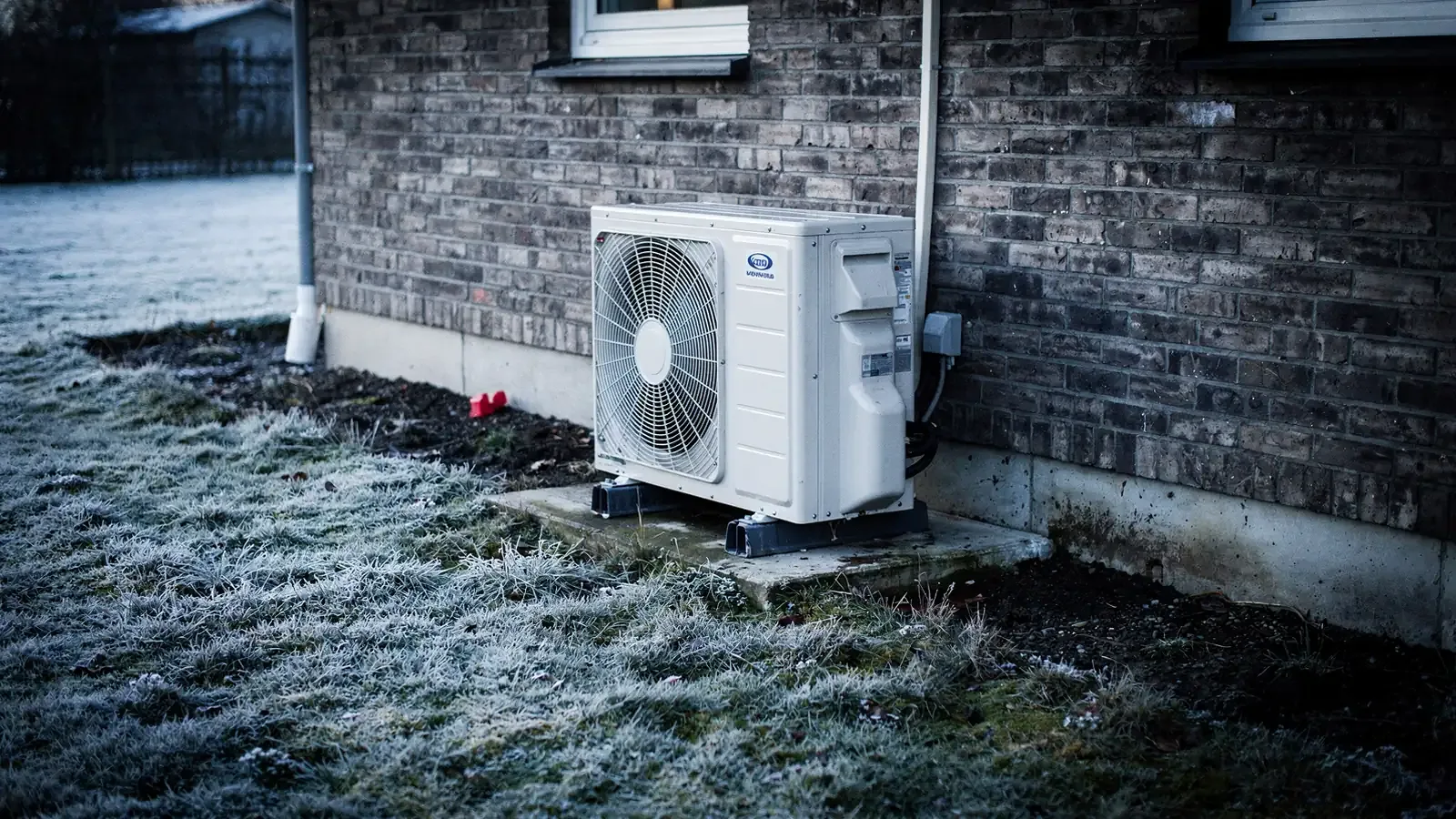
Heat pumps explained: how they work, how efficient they are, who buys them
A heat pump moves heat from outside air or the ground into a home, delivering more heat than the electricity it uses. European sales rose 13% in 2025 after two years of decline, led by Germany.

Measles comeback: why the US could lose its elimination status in 2026
Measles has returned to countries that once eliminated it, driven by gaps in vaccination. The US has confirmed more than 5,000 cases in 2026, and regional health experts are reviewing its elimination status this week.