Lithium battery recycling: how it works and why so little is recovered
Lithium-ion batteries can be recycled by smelting, chemical leaching or newer direct methods, recovering metals such as lithium, cobalt and nickel. About a fifth of battery lithium is now recycled, and the EU requires 50% recovery by the end of 2027.
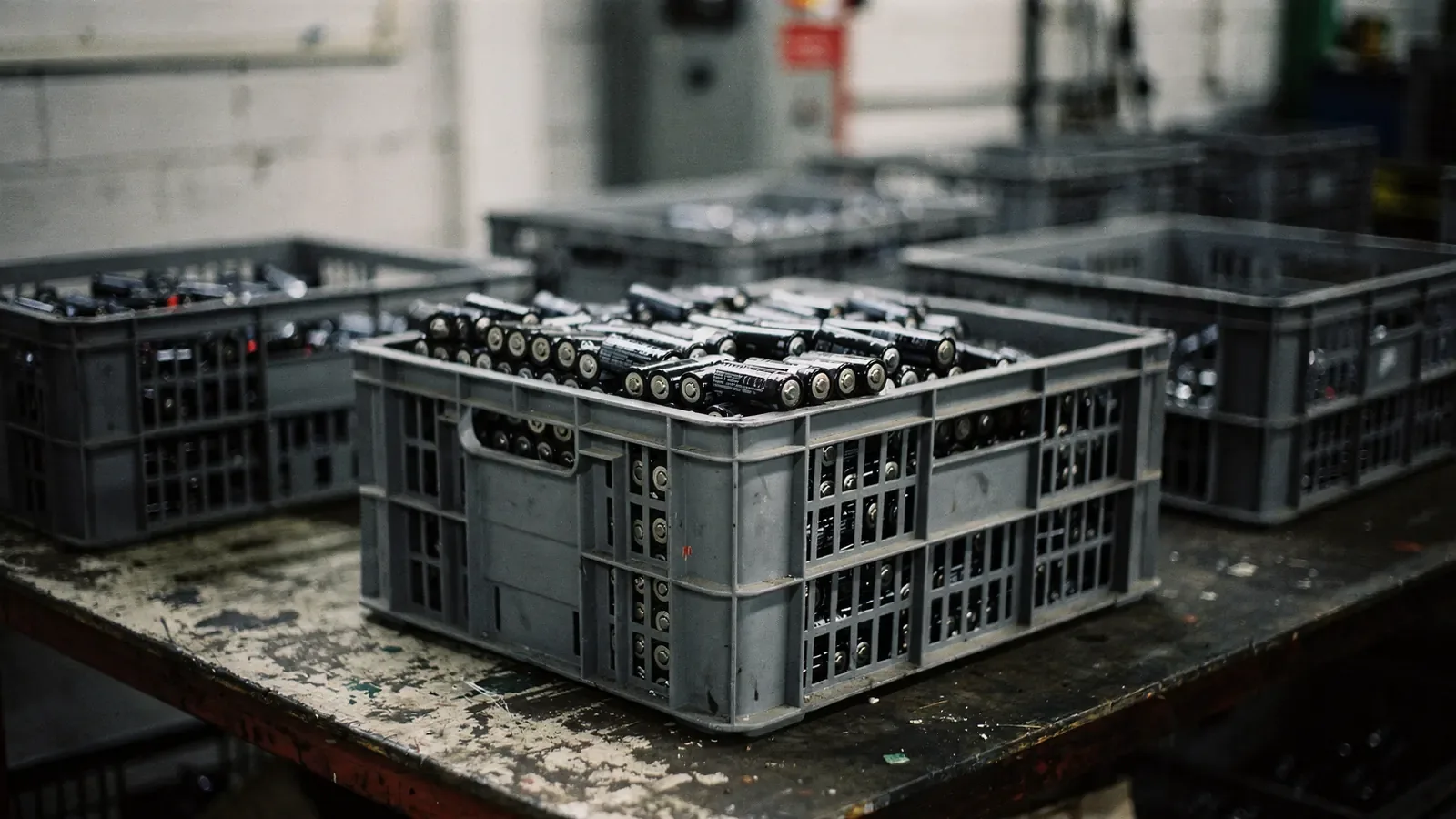
Lithium-ion batteries can be recycled, and the valuable metals inside them, lithium, cobalt, nickel and manganese, can be recovered and reused in new batteries. The difficulty is scale and economics. According to the International Energy Agency, about 20% of lithium from batteries is now recycled, up from 4% in 2015, and recycled lithium and nickel are expected to meet only around 5% of demand by 2035.
How are lithium-ion batteries recycled?
Battery recycling breaks used cells down and extracts their metals with heat, chemicals or both. The US Environmental Protection Agency describes three main approaches.
| Method | How it works | What it recovers |
|---|---|---|
| Pyrometallurgy (smelting) | Heat-based smelting | Cobalt and nickel; lithium needs additional steps |
| Hydrometallurgy (leaching) | Liquid-based chemical leaching | Can economically recover high amounts of cobalt, nickel, lithium and manganese |
| Direct recycling | Preserves the engineered cathode structure ("cathode to cathode") | Cathode material for reuse; saves energy but is still being brought to market at small scale |
Processed battery material sent to refiners is often called black mass in the industry; Li-Cycle's planned New York plant, for example, was designed to process black mass and similar feedstocks. Each route trades off energy use, cost and the range of metals recovered.
How much lithium is actually recycled?
Around a fifth of battery lithium is recycled today. In its Energy Technology Perspectives 2026, the IEA said lithium recycling from batteries has jumped from 4% in 2015 to around 20%, still well below the 40% to 80% recycling rates for metals such as steel, aluminium and copper.
The bigger constraint is the supply of old batteries: use is growing far faster than the number of batteries reaching end of life. A joint report by the IEA and the European Patent Office estimates that about 1.2 million electric vehicle batteries will reach end of life in 2030, rising to about 14 million in 2040. Until then, recycled material can cover only a small share of demand; the IEA expects recycled lithium and nickel to meet around 5% of demand by 2035.
Why does China dominate battery recycling?
China leads on both capacity and innovation. The IEA's Global Critical Minerals Outlook 2026 found that China accounts for over three-quarters of global pre-treatment capacity and 90% of material recovery capacity, as summarised by the Society of Chemical Industry.
Innovation is shifting the same way. The IEA–EPO study found that China's share of international patent families in battery circularity rose from 5% in 2013 to 29% in 2023, with Asian applicants holding 63% overall and Europe around 20%. Patenting in battery reuse and recycling grew by an average of 42% a year between 2017 and 2023, against 2% across all technical fields. Concentration in a few countries is a supply-chain risk similar to the one described in our explainer on shipping chokepoints and prices.
Why have some recycling companies struggled?
Recycling plants are expensive to build, and their income depends on volatile metal prices and the flow of scrap. The Canadian company Li-Cycle is the best-known casualty. It paused construction of its planned hub in Rochester, New York, in October 2023 over rising costs, and filed for bankruptcy protection in 2025. Glencore completed a takeover of its assets in August 2025; at that point only its site in Magdeburg, Germany, was operating, out of a combined 61,000 tonnes a year of capacity across five facilities.
Li-Cycle had a conditional US Department of Energy loan commitment of up to $475 million, but could not raise the equity required to draw on it, Waste Dive reported. Prices have since moved the other way: the IEA's 2026 critical minerals outlook found lithium prices more than doubled amid strong demand from energy storage and constrained supply.
What do EU rules require?
The EU's Batteries Regulation, in force since August 2023, sets binding targets for collection, recovery and recycled content. As summarised when the Council adopted it, the rules require 50% of lithium to be recovered from waste batteries by the end of 2027 and 80% by the end of 2031.
- Lithium recovery: 50% by end-2027, 80% by end-2031.
- Recycled content in new industrial, electric vehicle and starter batteries: initial minimums of 16% cobalt, 85% lead, 6% lithium and 6% nickel.
- Collection of portable batteries: 63% by end-2027 and 73% by end-2030.
- Collection of batteries from light means of transport, such as e-bikes: 51% by end-2028 and 61% by end-2031.
The European Commission adopted rules in 2025 on how recycling efficiency and material recovery are calculated. Recycling also matters for the climate case for electric vehicles, a theme explored in our report on the first year above 1.5°C of warming.
What should you do with old batteries at home?
Never put lithium-ion batteries in household rubbish or recycling bins; take them to a designated battery collection point. The EPA warns that damaged or mishandled lithium-ion batteries may catch fire or explode, that fires at end of life are common, and that batteries in household waste can start fires that endanger workers.
Frequently asked questions
Can lithium-ion batteries be fully recycled?
Not fully today. Hydrometallurgical processes can recover high amounts of cobalt, nickel, lithium and manganese, but smelting alone recovers mainly cobalt and nickel and needs extra steps for lithium. Globally, the IEA estimates about 20% of battery lithium is now recycled, well below rates for metals such as steel, aluminium and copper.
What happens to a battery after I drop it off?
Collected batteries go to specialist recyclers, which break them down and recover metals through smelting, chemical leaching or, at small scale, direct recycling of the cathode. The US EPA advises choosing recyclers certified to recognised standards such as R2 or e-Stewards. In the EU, recyclers must meet material recovery targets, including 50% of lithium by the end of 2027.
Is recycling enough to meet lithium demand?
No, not for many years. Too few batteries have yet reached end of life. The IEA expects recycled lithium and nickel to meet only around 5% of demand by 2035, while end-of-life electric vehicle batteries are projected to rise from about 1.2 million in 2030 to about 14 million in 2040.
Why are lithium batteries a fire risk in bins?
Most lithium-ion batteries may catch fire or explode if not handled carefully, according to the US EPA, and damage or mishandling increases the risk. Batteries thrown into household rubbish or recycling can start fires that endanger workers and communities. The EPA says fires at end of life are common and urges people to use designated drop-off points.
Who recycles the most batteries?
China. According to the IEA's Global Critical Minerals Outlook 2026, China accounts for over three-quarters of global pre-treatment capacity and 90% of material recovery capacity. In patents, the Chinese recycler Brunp overtook the Japanese and Korean companies that had led the field in 2019, according to the European Patent Office.
Sources
- US Environmental Protection Agency — Lithium-ion battery recycling (updated 18 September 2026)
- European Patent Office and IEA — Battery recycling innovation surging as countries seek to strengthen critical mineral supply (29 April 2026)
- Batteries International — IEA report counts global cost of China's battery dominance (4 April 2026)
- Society of Chemical Industry — Critical minerals supply chain worries go from risk to reality (IEA outlook 2026) (24 July 2026)
- Waste Dive — Glencore completes takeover of Li-Cycle battery recycling assets (8 August 2025)
- Waste Management World — EU Council adopts new regulation on batteries and waste batteries (11 July 2023)
- European Commission — Batteries (accessed November 2026)
More to read

How memories last: what neuroscience knows about long-term memory
Long-term memories last because the brain strengthens connections between neurons, then reorganises and reinforces them over days to years, much of it during sleep. Recent mouse studies have identified molecules and gene programmes that keep memories stable.

Vera Rubin Observatory: what its 10-year sky survey will reveal
The Vera C. Rubin Observatory in Chile began its 10-year Legacy Survey of Space and Time on 30 June 2026. It photographs the whole southern sky every few nights, sending millions of public alerts about changes each night.

First year above 1.5C: 2024 crossed the line, and 2026 is set to follow
2024 was the first calendar year more than 1.5C warmer than pre-industrial times. Copernicus says 2026 is virtually certain to be the second, but the Paris Agreement limit refers to a 20-year average, not single years.